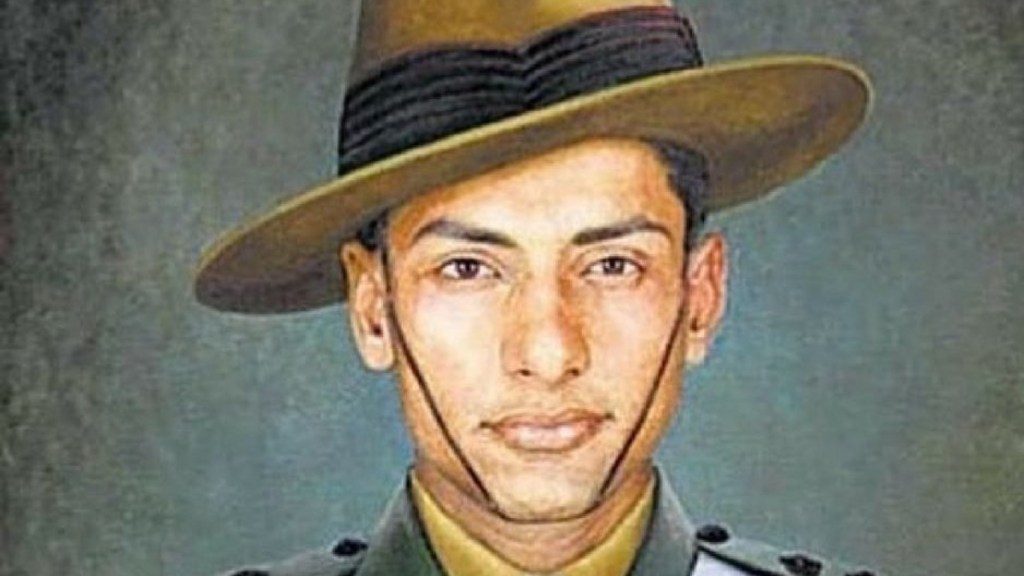
Captain Manoj Kumar Pandey was awarded the Param Vir Chakra (PVC) posthumously for his unmatched bravery in the 1999 Kargil War against Pakistan. He laid down his life for the nation on July 3, 1999. Following the detection of enemy intrusions in the Kargil sector, his unit, 1/11 Gorkha Rifles, was redeployed to the Batalik sector. The battalion had just completed an intense 18-month tenure in the Siachen Glacier and was en route to its peace posting in Pune when they were called back to action.
Under the command of Colonel Lalit Rai, the battalion was tasked with securing the Jubar, Kukarthang, and Khalubar areas, with their headquarters established at Yeldor. Captain Pandey quickly distinguished himself through a series of daring operations, playing a key role in the successful capture of Jubar Top.
In early July, ‘B’ Company of the battalion was assigned the critical mission of capturing Khalubar Top.
Among the many battles fought in the Batalik Sector during Operation Vijay, the recapture of Khalubar Top stands out as one of the most significant victories in the sub-sector. The Khalubar ridgeline, a dominating terrain feature in Batalik, was flanked by the Jubar Complex to the left and Point 5203 near Chorbat La on the right, close to the Line of Control. Its highest peak, Point 5287, stands at roughly 16,000 feet, with Point 4812 situated to its south.
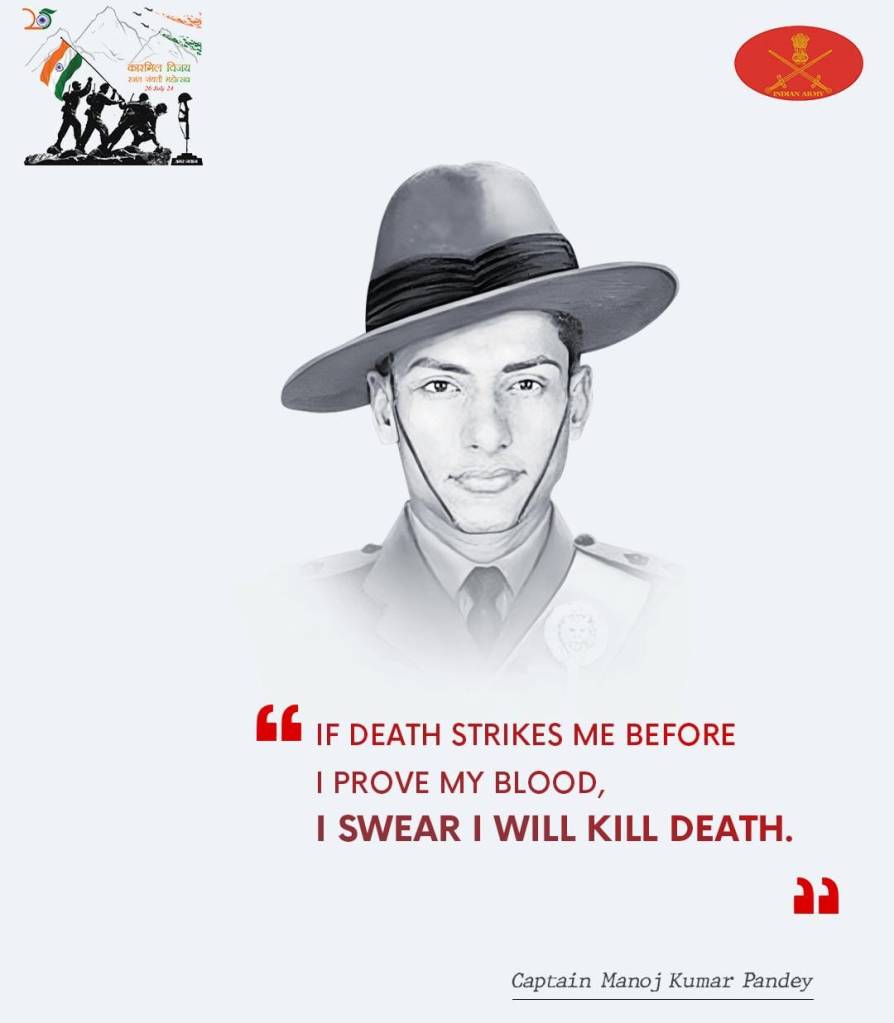
The enemy had taken control of this ridgeline, and its recapture was essential for regaining lost ground. The position offered commanding views over a vast area — from Junk Lungpa in the east, Gragrio Nala in the west, to Kukarthang in the southwest, and Muntho Dhalo, the enemy’s administrative centre, in the northwest. Crucially, the enemy’s troop induction routes and supply chains passed through Muntho Dhalo, making Khalubar the focal point of enemy defences in this sector.
In response, Headquarters 70 Infantry Brigade devised a plan to seize the ridgeline through simultaneous attacks launched from Junk Lungpa, targeting multiple positions across the ridge.
- In the northern sector, Ladakh Scouts, led by Lieutenant Colonel Chandiok, Wing Commander in charge of the Indus Wing, were assigned to capture Point 5000, Stangba, and Padma Go.
- In the central axis, 22 GRENADIERS were given the mission to secure positions around Point 5287, which were to be reinforced and expanded by 1/11 GORKHA RIFLES.
- On the western flank, the operation aimed to capture Area Bumps. This move was designed to force enemy reinforcements, disrupt logistics, and divert attention from the main assault on Khalubar.
The Khalubar ridgeline was broken down into several smaller objectives, each targeted in succession by the full firepower of the artillery deployed in the Batalik Sub-Sector over multiple days. The first assault on Khalubar was carried out by 22 GRENADIERS on the night of June 30 – July 1 1999. However, following a strong enemy counter-attack, the responsibility for capturing the ridgeline was reassigned to 1/11 GORKHA RIFLES.
This battalion, held in reserve and commanded by Colonel Lalit Rai, had recently completed an impressive and demanding operational tenure, including action in the Kashmir Valley and in the Siachen Glacier. At the time, 1/11 GORKHA RIFLES was in the process of relocating from Ladakh to a peace posting when it was redeployed for Operation Vijay.
The unit was inducted into the Batalik Sub-Sector on May 9, 1999 and promptly joined the 70 Infantry Brigade’s early operations to contain the enemy incursion by securing the Yaldor axis. In the weeks that followed, the Gorkhas steadily increased pressure on the intruders, inflicting losses and wearing them down in preparation for a full-scale assault to evict them from Kukarthang.
Throughout May and June 1999, 1/11 GORKHA RIFLES was actively engaged in operations focused on weakening the enemy’s defences around Jubar, Churubar, and Sispo, achieving several notable tactical successes. On July 2, the battalion—minus two of its companies—moved forward from its base at Yaldor to a forward assembly point located at the base of Point 4812.
How The Victory Of Khalubar Top Is Significant For Indian Forces In Kargil War?
As night fell on July 02–03, 1999, the Gorkhas began a challenging seven-hour ascent up the steep and rugged slopes of Khalubar Mountain. ‘B’ Company, led by Major C Correya, and ‘C’ Company, under Major Ajai Tomar, pressed on relentlessly, braving intense and deadly enemy fire as they made their way uphill. The Commanding Officer’s group also advanced independently toward the objective.
Captain Pandey was given command of a platoon in this operation. As they advanced, the platoon came under intense enemy fire. However, the Pakistani troops from the 8th Northern Light Infantry were well-dug-in and offered fierce resistance. The Gorkhas quickly realised that the only way to reclaim Khalubar was to engage in close-quarter combat, clearing out the enemy bunker by bunker.
Demonstrating exceptional bravery, Captain Pandey surged ahead of his men, shouting a battle cry, and charged the enemy positions head-on despite the heavy gunfire.
As Captain Manoj Pandey’s platoon neared its final objective after an exhausting, hours-long climb, they encountered fierce resistance from enemy positions around Area Bunkers. Suddenly, they came under heavy and concentrated fire from elevated enemy posts surrounding them. Recognising the threat these positions posed to the overall mission, the Commanding Officer entrusted Captain Manoj’s platoon with the critical task of neutralising these bunkers to ensure that the attack could succeed before daylight.
In a fearless assault, he neutralised the first enemy position, killing two enemy soldiers, and proceeded to destroy the second position, eliminating two more. Even after being wounded in the shoulder and leg, he refused to retreat and continued leading the charge. He went on to destroy four enemy bunkers, inspiring his troops throughout the battle.
While attacking the fourth bunker, Captain Pandey lobbed a grenade to destroy it, but in doing so, he was fatally hit by a burst of fire to the forehead. He collapsed at the final enemy position and succumbed to his injuries on the battlefield.
For his unparalleled courage, leadership, and ultimate sacrifice, Captain Manoj Kumar Pandey was honoured with the Param Vir Chakra, India’s highest gallantry award.
Captain Pandey’s selfless courage, unwavering leadership, and supreme sacrifice became a defining moment of heroism in the Kargil War, inspiring generations to come.

 Defence Stories
Leave a comment